
Delays in promised service delivery were earlier settled between client and service provider. More organisations now opt for a legal settlement to save cost and protect investor sentiment, say analysts.

By 2026, around 25 per cent of the global population may spend at least an hour a day on Metaverse. This will open the doors for many businesses, the NFTs market will spread, and Web 3.0 will attract more investment.

Infosys chief Vishal Sikka took home an annual salary package of $7.45 million (about Rs 48.73 crore) for the 2015-16 financial year.

Most large companies have curbed their hiring plans in 2018-19 because they continue to invest in digital technologies.

Tepid growth in verticals like banking and finance, healthcare, retail and automotive will drag overall IT spends in the current year, reports Debasis Mohapatra.

At times of slow growth, India has seen number of graduates doubling since 2008 to almost 25 million in 2016

Ajit Mishra, vice president, research, Religare Broking, answers your queries.

Which entrepreneur would willingly part with her or his hard-earned money for grasping, self-serving politicians? asks Debashis Basu.

Though a weak dollar will lend some support to revenues and margins in FY21, the demand environment will outweigh any gain.

Appreciating rupee against the dollar and fresh buying by domestic institutional investors added to the momentum

At a time when the market is betting on a 'higher for longer' global interest rate view, Accenture's (ACN) weak revenue forecast is a negative read-through for the Indian IT firms, according to analysts. The Dublin-based company sees its revenue growth at 2-5 per cent in constant currency (cc) for the financial year 2024 (FY24), below the pre-Covid levels of 5-8 per cent for FY17-20. The weak projection, thus, signals that slower demand is likely to persist this year, and any recovery is unlikely in the near-to-medium term, experts note.
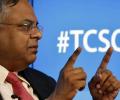
In dollar terms, its m-cap rose to $76 billion

After last year's lull, number of offers jump by 15%.

In dollar terms, TCS' market valuation rose to $84 billion.

Amid Trump's expected action against employment visas, India's bellwether IT firms reveal they have been preparing for this eventuality for years.

The early bird results for the January-March quarter of 2022-23 (Q4FY23) show a pick-up in earnings growth, despite a slowdown in revenue growth, thanks to a decline in input costs and lower provisioning for bad loans by banks. The combined net profit of 66 companies that have, so far, declared their quarterly results was up 15.2 per cent year-on-year (YoY) in Q4FY23, an improvement from 4.3 per cent YoY growth in Q3. Net sales growth of these companies, however, slowed down to 11.5 per cent YoY in January-March 2023, the slowest rate in eight quarters.

According to reports, Vodafone NZ had offered all its employees, other than call centre and retail staffers, voluntary severance package

Nasscom and the Chinese government have given the task of creating a matchmaking platform to Zeta-V, set up in June 2017 in Shanghai by Sujit Chatterjee, former CEO of TCS China, and Rangarajan Vellamore, former CEO of Infosys China.
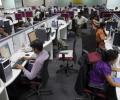
Employee costs for Indian IT services players have touched an all-time high as salaries soar in their effort to retain talent. Engineer salaries are going through the roof. According to a news report, Infosys, which reported a 27.7 per cent attrition rate for the fourth quarter of FY22, plans to have an average salary hike of 12-13 per cent. High potential employees will get increases of 22-23 per cent.

The thrust, they feel, remains on design thinking, AI and digital besides enhanced focus on investing in selling and marketing efforts, expanding local talent base and re-skilling staff

When it comes to rewarding top- performing employees, many large corporates are giving out expensive gifts such as latest iPhones, Mercs, flats and jewellery

The rally in mid- and small-cap stocks has spilled over into the IT sector as well. Second and third-tier IT stocks, which historically traded at a discount to the big five IT companies, are now trading at nearly 25 per cent premium to their large-cap peers. The smaller IT companies have a price-to-earnings (P/E) multiple of nearly 38 times against the big five's current P/E multiple of around 31x.

IT sector replaces auto sector after a 6-month gap.

IT sector's trading multiples hit post-Lehman lows, providing good entry points.

Investors seem to be shying away from stocks of companies in the 'digital' space with most counters that comprise the Nifty India Digital index giving negative returns over the past year. The index tracks the performance of a portfolio of stocks that broadly represent the 'digital theme' within basic industries, such as software, e-commerce, IT-enabled services, industrial electronics, and telecom services. The fall in some of these stocks over the past year has been steep; the sharpest decline of around 60 per cent was seen in shares of PB Fintech (parent company of Policybazaar).

From acquiring creative agencies, to setting up onsite innovation centres and turning around BFSI with entirely new digital offerings, 2018 had seen the IT industry going from initial lows to new highs.
It's the second time Nasscom has projected single-digit growth in a decade.

Auto, pharma, IT, chemicals among sectors with significant reliance on UK and European nations with Tata Motors, Motherson Sumi, Tata Steel, TCS, Wipro, Infosys and Tech M among key names.
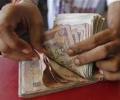
After Infosys, hike in other IT companies also seen in 6-9% range.

A slowdown in hiring by India's top IT companies has resulted in a sharp increase in the industry's profit per employee in Q3FY23. The top four IT companies earned a net profit of 1.7 lakh per employee during October-December 2022, up 8.6 per cent from Rs 1.57 lakh in Q2FY23 and 16.3 per cent from a record low of Rs 1.47 lakh in Q1FY23. Earnings per employee in the third quarter were, however, still down 0.9 per cent on a year-on-year (YoY) basis.

Industry experts are of the opinion that the spurt in recruitment happened as IT services firms went aggressive on hiring in anticipation of a strong demand environment.

IT major Wipro's Azim Premji donated Rs 22 crore a day or Rs 7,904 crore in a year to emerge as the most generous Indian in FY20 and top a list of philanthropy. Premji pipped HCL Technologies' Shiv Nadar, who had earlier topped the list collated by Hurun Report India and Edelgive Foundation, by a wide margin.
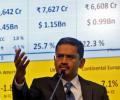
The buyback, if successful, will surpass RIL's 2012 share repurchase of Rs 10,400 cr

Polarisation and the increase in index weight of a few a stocks have weighed on performance. The worst performers include Nippon India Large Cap and HDFC Top 100 (2.6 per cent).

Benchmark stock indices Sensex and Nifty tumbled nearly 1 per cent on Wednesday due to profit booking in banking, financial and IT stocks after a recent rally. The 30-share BSE Sensex plunged 537.22 points or 0.94 per cent to end at 56,819.39 as 24 of its stocks declined. During the day, it tanked 772.57 points or 1.34 per cent to touch a low of 56,584.04. The broader NSE Nifty declined by 162.40 points or 0.94 per cent to 17,038.40 with 39 of its constituents ending in the red. Bajaj Finance was the biggest loser among Sensex stocks, dropping by 7.24 per cent.

'Pockets of mid and small-cap indices are showing exuberance and are discounting even FY23 valuations now.'

Tier-II and tier-III towns have a reason to rejoice.
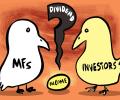
The combined dividend payout by early-bird companies -- those that have declared their results for FY21 -- is up 8.9 per cent, lower than the 21.9 per cent rise in in FY20 but ahead of the underlying growth in India Inc business last year. Combined net sales of these early birds were down 1.8 per cent last financial year while net profit was up 27.3 per cent in FY21. Some top companies that have stepped up dividend payout in FY21 include Hindustan Unilever, Indus Towers, Tata Steel, Ultratech Cement, Larsen & Toubro, Dabur, Asian Paints, and UPL. In contrast, banks have skipped dividends under an RBI diktat while companies such as Marico, TCS, Maruti Suzuki, and Godrej Consumer are paying lower dividends for FY21.
About 1,556 shares have advanced, 1,211 shares declined, and 182 shares are unchanged.

Brokerages expect India Inc to report an upturn in earnings for the March quarter of 2022-23, after a relatively muted showing in the previous two quarters. This growth is expected to be led by banking, financial services and insurance (BFSI) companies, FMCG firms, and automobile makers. The combined net profit of the Nifty50 companies (excluding Adani Enterprises) is expected to have grown 15.6 per cent to Rs 1.77 trillion in Q4FY23, from Rs 1.53 trillion a year ago.
